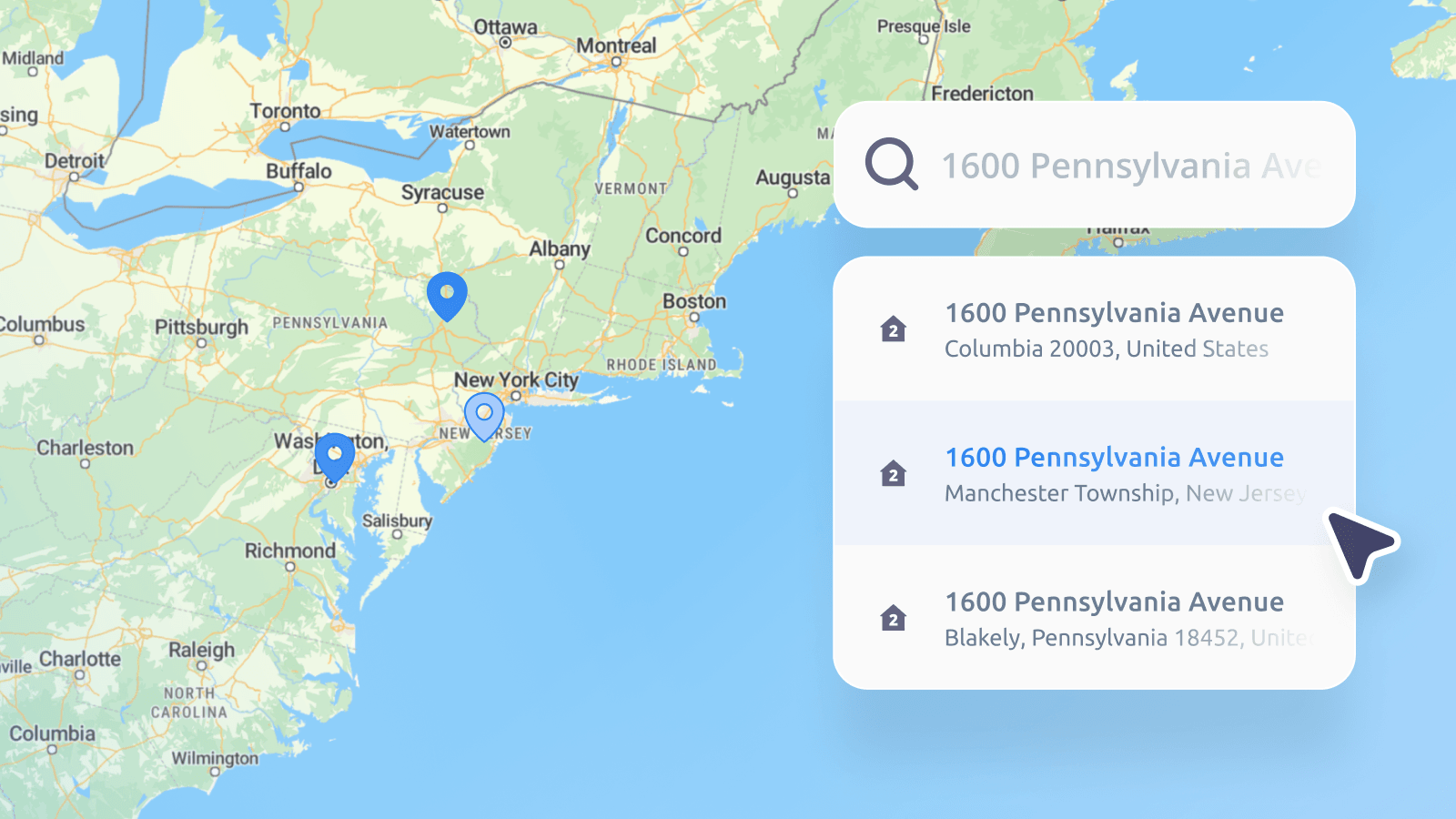
Get the right places displayed in your interface every time your users search for a location. We’ve cleansed our data to ensure no irrelevant entries clutter valuable screen space in search results. We now guarantee that only inhabited place types appear when searching for locations designated as "places". We’ve also deduplicated the data to ensure you don’t get multiple results for the same place.
This matters because screen space can be tight, especially on mobile devices. If your search returns 12 results, there may not be room for them all without a lot of scrolling. If those 12 results describe only 3 different locations, clean data wouldn't require scrolling. This would greatly improve the user experience and help prevent users from missing the right results.
How to implement searches Learn More about geocoding
What makes geocoding results bad?
High-grade geocoding engines need lots of data, created from multiple datasets from different sources. Beyond out-of-date or incomplete sources, official government datasets often include placeholder data, administrative codes, legacy entries, and other bookkeeping additions.
Other problems arise from duplicate entries. Good geocoders account for duplicates across datasets as they are loaded; however, many miss internal duplicates within each dataset. These internal duplicates can exist for a number of good reasons, where the data structure is such that tables contain multiple place types, villages, towns, districts, counties, regions, etc.
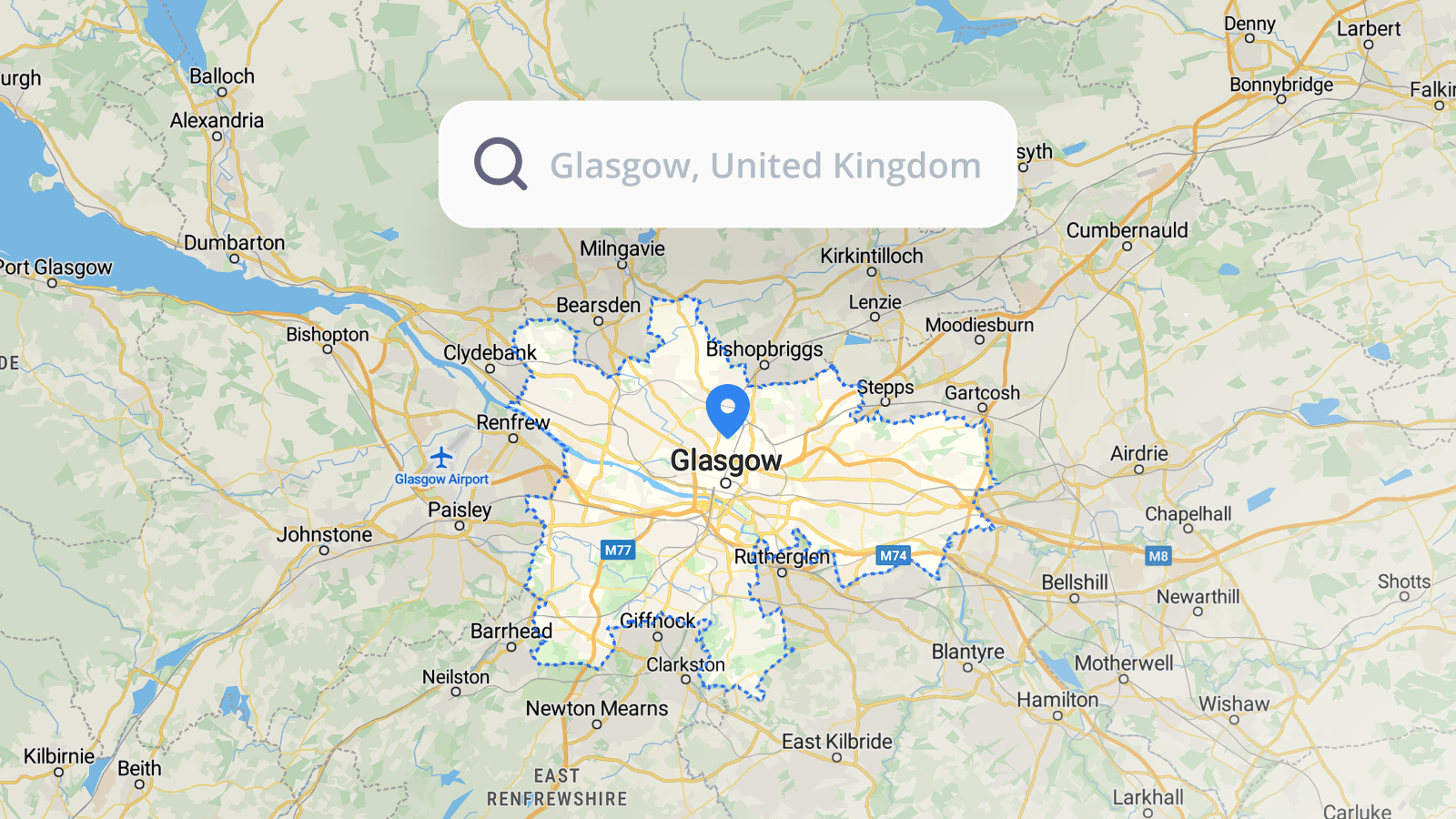
It is important to retain different places with the same name; however, even good geocoders often don’t account for the same place having multiple categories. Searching for Glasgow in Scotland will often return a point for the city's location, but also one or more polygons for Glasgow City Center and the Glasgow City Council Area. This type of issue is common in the USA, France, Canada, Germany, Spain, Russia, Sweden, Vietnam, and Great Britain.
Another source of duplication occurs in bilingual areas; for example, the town of Úcar in Spain is also known as Ukar in the local Basque language. In some databases, this can lead to multiple entries like "Úcar/Ukar", "Ucar", and "Ukar/Ucar" all appearing in the results of one search.
How to improve your geocoding
We have carried out extensive processing on our data to ensure the issues above don’t occur. On top of the regular import and cleansing procedures used on all high-quality geocoding databases, we have implemented some extras, including 3 further deduping checks:
- Purge placeholder and bookkeeping values
- Merge locations with their administrative areas for place searches
- Merge bilingual entries into a single entry that can be searched in either language
Get high-quality placename searching for your maps
Check out our extensive documentation on implementing place and address searching on your maps. There are tutorials for the MapTiler SDK, MapLibre, Leaflet, OpenLayers, and even pure HTML & JavaScript.